Project overview:
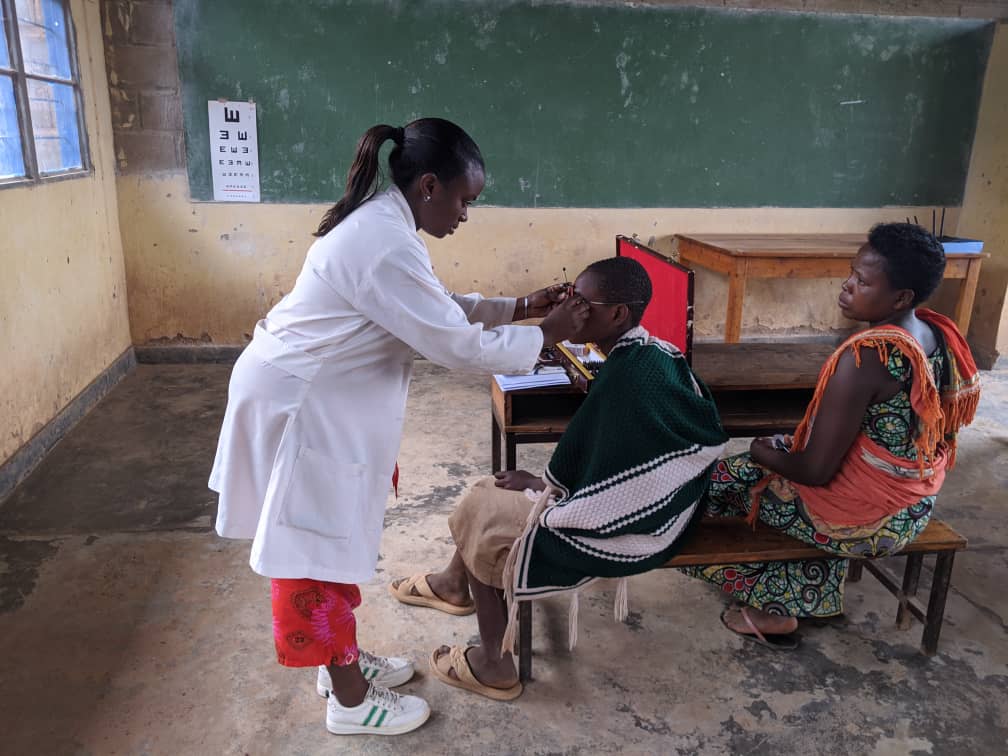
LIFT ran between December 2024 to June 2025, establishing a team of healthcare professionals to identify school-aged children in need of assistive devices, and link them with local services to ensure they can access them.
Why was the project needed?
In Rwanda, children with disabilities often face barriers to education and community participation due to a lack of appropriate assistive devices and inclusive services. To address this, Chance for Childhood, in partnership with UNICEF and the Rwanda Biomedical Centre conducted an assessment in early 2025 to identify children in need of assistive devices. The assessment focused on the districts of Gisagara, Ngororero and Gakenke.
The assessment found that:
- Of the 2,455 children assessed, 944 had physical disabilities, followed by mental/intellectual (570), and multiple disabilities (477).
- 32% of children with disabilities were not enrolled in school, and only 6% attended secondary education.
- 29% of children were identified as needing at least one assistive device.
- Barriers to schooling included inaccessible terrain, lack of inclusive environments, and stigma.
- Gakenke had the highest number of assistive device needs due to its larger population and difficult terrain.
- 42% of caregivers also received a diagnosis for the first time during the assessment.
- Negative attitudes and lack of inclusive school environments were significant barriers.
To address this, the LIFT project assessed school-aged children to determine what support they need and provided assistive devices.
Project objectives:
Overall objective: To establish a multidisciplinary team of healthcare professionals to identify rehabilitation needs and provide appropriate intervention among school aged children with disabilities in Gisagara, Ngororero and Gakenke districts. Other project objectives:
- To conduct a comprehensive multidisciplinary assessment to school aged children with disabilities in 5 districts of Rwanda
- To provide referral services to appropriate services in according to the identified needs.
- To provide assistive devices to the children with disabilities identified with a need
- To provide post-fitting follow up support
Project impact:
- The project reached 2,455 children with disabilities in Gisagara, Gakenke and Ngororero. 1,433 (58%) were boys and 1,022 (42%) girls.
- By the end of the project, 348 assistive devices had been fitted to 323 children with disabilities in need (Some children with multiple disabilities were fitted with more than one device). These included 125 wheelchairs and 90 standing frames.