
Project overview:
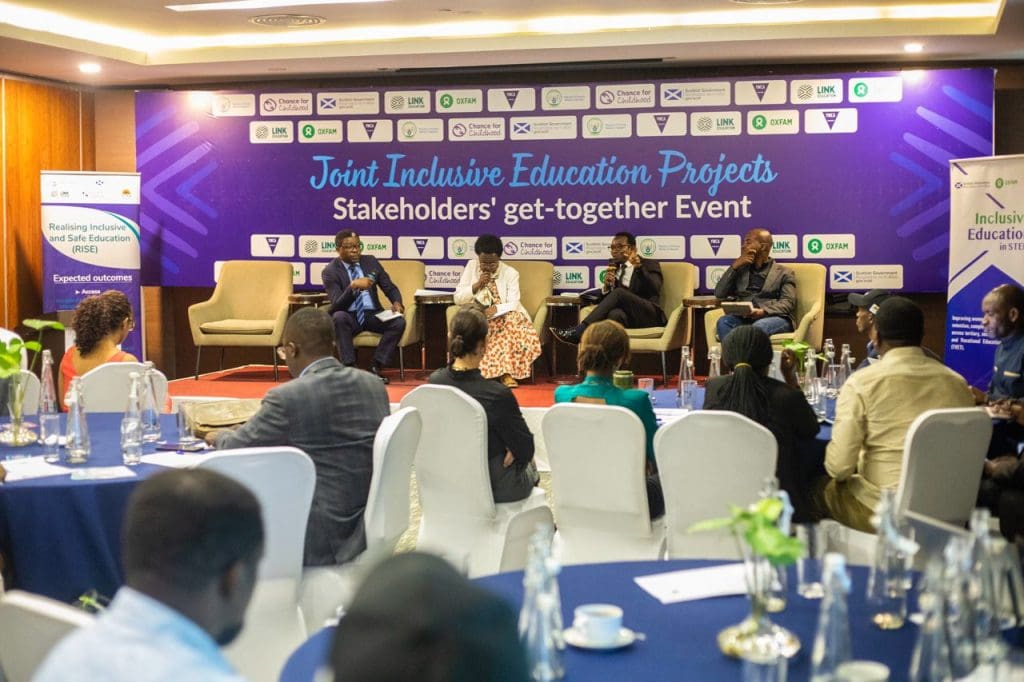
The Realising Inclusive and Safe Education (RISE) project is working across Malawi, Rwanda and Zambia, reaching a total of 422 government schools, 5,952 teachers and school leaders, 402,981 learners (of which 10,031 have a disability), and 16 resource centres.
Chance for Childhood is running the project in Rwanda and will reach:
- 57 schools
- 1,311 teachers and leaders
- 100,035 learners (5,130 with disabilities)
- Three resource centres
RISE will strengthen government support for children with disabilities, especially girls, and ensure these children are able to access a safe and quality education. Project partners will support identification, assessment and device provision for children with disabilities, strengthen teacher and leadership training in inclusive education, and engage communities and school governance bodies to better support children with disabilities.
RISE is delivered by Link Community Development Malawi, Chance for Childhood in Rwanda and School to School in Zambia. The programme is managed by Link Education International and funded by the Scottish Government.
Why is the project needed?
Despite the critical importance of education, children with disabilities or special educational needs are often left behind. A lack of inclusive infrastructure in schools is a major barrier, as is a lack of training and resources for teachers, inadequate assistive devices for the children, and discrimination. According to UNESCO, children with disabilities are 2.5 times more likely not to go to school than their non-disabled peers. In rural Rwanda, only 8.4% of children with disabilities attend school.
Key activities include:
- Co-designing project interventions with local communities and stakeholders to ensure activities are targeted and meet the greatest local needs
- Identifying and supporting learners through the provision of assistive devices such as hearing aids, glasses and mobility aids, and links to medical help and social services
- Teacher and school leader professional development, including customised materials and support for local trainers to lead sessions at primary and secondary level
- Inclusive education training and community sensitisation for School Management Committees, parents, school leaders and district education authorities
- Training for schools in creating evidence-based, participatory and accessible improvement plans with a gender and disability lens, feeding data to the national level
- Consulting with Ministries of Education to ensure gender and inclusion are prominent agendas within national education standards
Project objectives:
- Reach 422 government schools
- Support 402,981 learners (10,031 with disabilities)
- Support 5,952 teachers and school leaders
- Support 16 resource centres.
Project fact file:
Locations: Rwanda, Malawi and Zambia
Dates: July 2024 – March 2029
Funding Partner: The Scottish Government
Implementing Partner in Malawi: LINK Education
Implementing Partner in Zambia: School to School International
Implementing Partner in Rwanda: Chance for Childhood
Read the full project brief here.